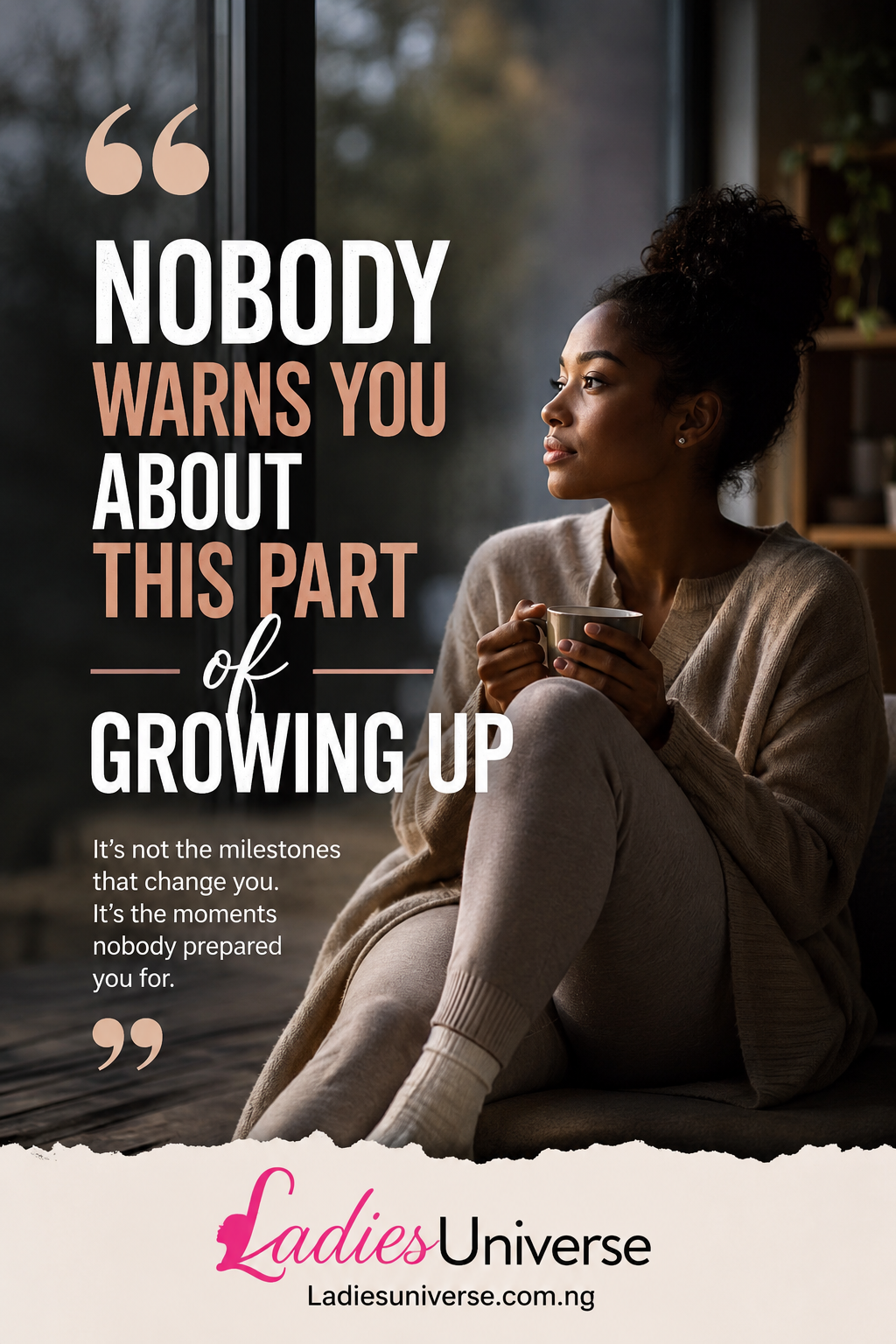
Growing up is often presented as something beautiful.
You finish school.
You get a job.
You become independent.
You make your own money.
You meet new people, fall in love, build a career, create a home, and eventually become the person you always imagined you would be.
But there is a part of growing up that nobody prepares you for. It is the part where you begin to realise that becoming an adult does not automatically mean having everything figured out.
Sometimes, growing up means feeling lost while everyone around you appears to know exactly where they are going.
Sometimes, it means outgrowing people you thought would be in your life forever. It means watching friendships become distant, relationships end, plans change and dreams take longer than expected.
And sometimes, the hardest part is realising that the person you are becoming may be very different from the person you once thought you would become.
You May Feel Like You Are Behind
One of the quietest struggles of growing up is comparison.
Someone you went to school with is getting married.
Someone else has bought a house.
Another person has started a successful business.
Someone is travelling around the world.
Another person seems to have found the love of their life.
Then you look at your own life and wonder:
“What am I doing wrong?”
The truth is that adulthood does not follow one universal timetable.
Psychologists describe the transition from adolescence into adulthood as a period that can involve identity exploration, instability, changing relationships and work situations, and the feeling of being “in between.”
You may be responsible for yourself without necessarily feeling like you have everything under control. That does not mean you are failing.It means you are growing. Your life is not late simply because someone else’s life looks further ahead.
Some Friendships Will Not Survive
Nobody really prepares you for how much relationships can change as you grow older.
When you are younger, friendship can feel effortless. You see each other regularly because you attend the same school, live nearby or share the same routines.
Then adulthood happens.
People get jobs.
They relocate.
They enter relationships.
They start families.
Their priorities change.
Their responsibilities increase.
Suddenly, the person you used to speak to every day becomes someone you occasionally check on.
And sometimes there is no dramatic argument.
You simply grow in different directions. That can hurt.
But not every friendship that ends was a mistake.
Some people belong to particular seasons of your life. Their presence may have been meaningful even if their journey with you was not permanent.
Research on social relationships during major life events also suggests that building new relationships can be particularly important for wellbeing among younger adults.
So when some connections change, do not assume your best relationships are behind you.
You may simply be making room for new ones.
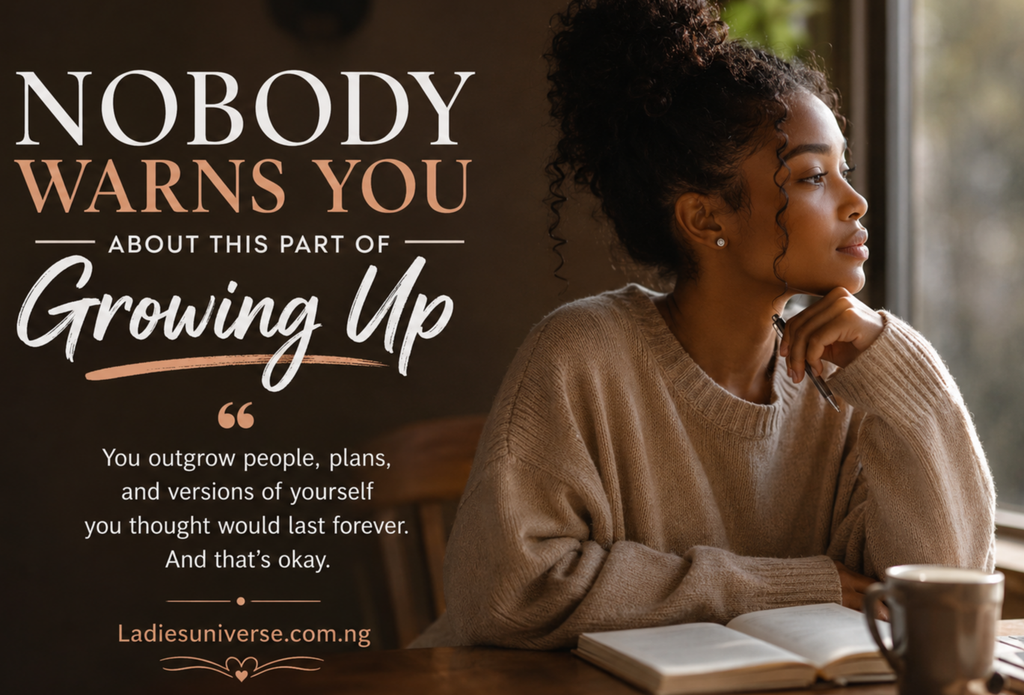
You Will Outgrow Old Versions of Yourself
Growing up is not only about changing your circumstances.
It is also about changing internally.
The things you once tolerated may suddenly become unacceptable.
The things you once desperately wanted may no longer interest you.
The people you once tried so hard to impress may no longer matter.
Your definition of success may change.
Your understanding of love may change.
Even your dreams may change.
And that can feel confusing because we are often taught to choose a path and stick to it forever.
But discovering that you want something different does not necessarily mean you wasted your time.
Sometimes you needed the old version of your life to discover what the new version should look like.
Identity development is a major part of the transition into adulthood, particularly as people explore different possibilities in work, relationships, values and personal direction.
You are allowed to change your mind.
You are allowed to start again.
You are allowed to become someone your younger self would not recognise.
Independence Can Feel Lonely
Everyone talks about the freedom that comes with adulthood. Few people talk about the loneliness that can accompany it. There comes a point when you realise that nobody is coming to organise your life for you.
You have to make the appointment.
Pay the bill.
Apply for the job.
Make the difficult decision.
Take responsibility for your mistakes.
And sometimes, you have to encourage yourself when nobody else knows that you are struggling. That kind of independence can be empowering, but it can also be exhausting.
This is why taking care of your mental and physical wellbeing should not be treated as an optional part of becoming an adult.
Your responsibilities may increase, but your need for rest, connection, healthy habits and emotional support does not disappear.
In fact, maintaining meaningful relationships during significant life events is associated with better wellbeing. Being independent does not mean refusing help. Sometimes, real maturity is knowing when you need it.
Your Parents Become Human
Another strange part of growing up is seeing your parents differently.
As a child, they can seem almost invincible.
As you become an adult, you begin to see their imperfections.
You realise they were learning too.
They made mistakes.
They had fears.
They experienced disappointments.
They had dreams that may not have worked out exactly as planned.
And suddenly, the relationship changes.
You are no longer simply the child being guided.
You are becoming an adult who can understand, question, forgive, disagree and sometimes even support the people who raised you.
That transition can be complicated. It requires boundaries, understanding and sometimes difficult conversations.
Growing up does not mean you must agree with everything your family believes. It means learning how to honour where you came from while still becoming your own person.
Love May Not Look the Way You Imagined
Many people grow up believing that adulthood will eventually lead to a perfect relationship.
You will meet someone.
You will fall in love.
Everything will make sense.
But real relationships are more complicated.
People change.
Timing matters.
Compatibility matters.
Emotional maturity matters.
Sometimes two people can care deeply about each other and still not be right for each other.
Relationships can also end. And when they do, it can feel like you have lost part of the future you imagined.
But heartbreak can also teach you important things about boundaries, communication, self-respect and the kind of relationship you actually want. Research on relationship development shows that relationship satisfaction changes across the lifespan and can be influenced by age, relationship duration and life circumstances.
So do not measure your life by whether you are currently in a relationship.
Being single is not proof that something is wrong with you.
Being in a relationship is not proof that someone has “made it.”
Your relationship status is only one part of your life.
You Will Discover That Success Is More Complicated
When you are younger, success can look simple.
Good grades.
A good job.
Money.
A nice house.
A successful career.
Marriage.
Children.
But adulthood teaches you that achievement and fulfilment are not always the same thing.
You can accomplish something you worked incredibly hard for and still feel empty afterward.
You can have a modest life and feel deeply fulfilled.
You can change careers.
You can leave a relationship.
You can move somewhere new.
You can decide that the definition of success you inherited from other people is not the definition you want to live by.
Research on young adulthood has found that traditional milestones such as employment, housing and relationships can be associated with life satisfaction, but the transition into adulthood has also become more complex and prolonged.
Your life does not have to look impressive from the outside to be meaningful on the inside.
You Will Learn That Rest Is Not Laziness
Growing up can make you feel like you always need to be doing something.
Working.
Studying.
Building.
Earning.
Planning.
Improving.
Achieving.
But your body is not a machine.
You cannot continuously demand productivity from yourself without eventually paying a price.
Rest is part of taking care of yourself.
So is eating properly.
Sleeping enough.
Moving your body.
Taking breaks.
Having meaningful conversations.
Spending time away from your phone.
Going for medical check-ups when necessary.
And allowing yourself to have days when you are simply human.
You do not have to earn the right to rest.
You May Become More Comfortable With Not Knowing
Perhaps the biggest lesson adulthood teaches is that certainty is rare.
You will make decisions without knowing exactly how they will turn out.
You will take opportunities that may not work.
You will meet people who surprise you.
You will experience unexpected endings and unexpected beginnings.
And slowly, you may realise that growing up is not about knowing exactly what comes next.
It is about becoming capable of handling what comes next.
That is a very different thing.
You do not need to have your entire life mapped out.
You only need enough courage to take the next honest step.
Growing Up Is Not Becoming Perfect
Nobody warns you that adulthood is less about finally becoming “finished” and more about continuously becoming.
There will be seasons when you feel confident.
There will be seasons when you question everything.
There will be moments when you are proud of yourself.
There will be moments when you wish you had made different choices.
There will be people you meet, people you lose and people you never expected to become important.
There will be dreams that come true and others that quietly disappear.
And through all of it, you will keep changing.
That is not failure.
That is life.
So if you are currently wondering why you do not feel as accomplished, confident, settled or certain as you thought you would by now, take a breath.
You are not necessarily behind.
You are not required to have everything figured out.
You are allowed to grow slowly.
You are allowed to change direction.
You are allowed to start over.
And most importantly, you are allowed to build a life that actually feels like yours; not one that simply looks successful to everyone else.
Nobody warns you that growing up can be confusing, lonely and beautiful at the same time. But perhaps that is the part nobody tells you:
You are not supposed to have everything figured out.
You are supposed to keep becoming.
And sometimes, the person you become after all the uncertainty is far more beautiful than the person you originally planned to be.