

Have you ever shared something important with someone, only to realise they weren’t really paying attention? It’s a frustrating experience that almost everyone has faced. Ironically, while most people want to be heard, far fewer take the time to truly listen. The ability to listen well is one of the most powerful skills you can develop because it influences your relationships, career, and personal growth.
Listening is one of the most valuable communication skills anyone can develop, yet it is often overlooked. Many people believe they are good listeners simply because they remain silent while someone else is speaking. In reality, true listening involves much more than hearing words. It requires attention, empathy, patience, and a genuine desire to understand another person’s thoughts and feelings. Whether you are speaking with your family, friends, colleagues, or partner, becoming a better listener can strengthen relationships, reduce misunderstandings, and help others feel respected and valued. In a world full of distractions, learning to listen well is a skill that sets you apart.
In this article, you’ll discover why listening matters, the habits that prevent effective listening, and practical ways to become a better listener in your everyday life.
Why Listening Is So Important
Communication is a two-way process. While speaking allows us to express ourselves, listening helps us understand others. When people feel heard, they are more likely to trust us, cooperate with us, and build meaningful relationships. Research has consistently shown that active listening improves communication, strengthens relationships, reduces conflict, and promotes emotional well-being. It is also recognised as an essential skill in leadership, education, healthcare, counselling, and customer service. Being a good listener can help you:
Build stronger personal and professional relationships.
Gain a deeper understanding of different perspectives.
Resolve disagreements more peacefully.
Improve teamwork and collaboration.
Make better decisions with more complete information.
Support friends and loved ones during difficult times.
Listening is not simply about responding. It is about understanding.
Signs You May Need to Improve Your Listening Skills
Many people unintentionally develop poor listening habits. You may need to improve your listening if you often:
Interrupt people before they finish speaking.
Think about your response while someone is still talking.
Frequently misunderstand instructions or conversations.
Check your phone while someone is talking.
Change the subject before the other person has finished.
Assume you already know what someone will say.
Recognising these habits is the first step towards becoming a better listener.
Give Your Full Attention: One of the greatest barriers to listening today is distraction. Mobile phones, social media, television, and even our own thoughts often compete for our attention. When someone is speaking to you:
Put your phone away.
Turn off unnecessary distractions.
Face the speaker.
Maintain comfortable eye contact.
Focus entirely on what they are saying.
Giving someone your undivided attention communicates respect and shows that you value what they have to say.
Listen to Understand, Not Just to Reply: Many conversations become less meaningful because people are preparing their response instead of truly listening. Instead of asking yourself, “What should I say next?” ask: What is this person really trying to tell me? How are they feeling? What message are they hoping I understand? Understanding should always come before responding.
Avoid Interrupting: Interrupting can make people feel ignored or dismissed. Even if you are excited to contribute, allow the other person to finish speaking before sharing your thoughts. Pausing for a few seconds after someone finishes speaking also gives them the opportunity to add anything they may have forgotten. Patience is one of the defining qualities of an excellent listener.
Pay Attention to Non-Verbal Communication: Words tell only part of the story. Facial expressions, tone of voice, posture, and body language often communicate emotions more clearly than words. Notice if someone appears:
Nervous
Excited
Frustrated
Sad
Confident
Uncomfortable
Paying attention to both verbal and non-verbal cues helps you better understand the complete message.
Ask Thoughtful Questions: Asking relevant questions demonstrates genuine interest. For example:
“Can you tell me more about that?”
“How did that make you feel?”
“What happened next?”
“What do you think caused it?”
Open-ended questions encourage meaningful conversations and show that you are engaged.
Practise Empathy: Empathy means trying to understand another person’s feelings without immediately judging or criticising them. You do not always have to agree with someone to understand their perspective. Simple responses such as:
“That sounds difficult.”
“I understand why you feel that way.”
“Thank you for sharing that with me.” It can make people feel supported and respected.
Resist the Urge to Give Immediate Advice: Many people simply want someone to listen rather than solve their problems. Before offering advice, consider asking:
“Would you like my opinion, or would you prefer that I simply listen?”
This small question shows respect and prevents unwanted advice.
Reflect and Clarify: Good listeners often repeat or summarise what they have heard to ensure understanding. For example:
“So, if I understand correctly, you’re saying…”
“It sounds like you’re feeling disappointed because…”
This technique reduces misunderstandings and reassures the speaker that you are paying attention.
Be Patient with Silence: Not every conversation needs to be filled with words. Sometimes people need a few moments to gather their thoughts. Allowing silence instead of rushing to fill it often leads to deeper, more honest conversations. Comfortable silence is a sign of mature communication.
Keep an Open Mind: Avoid making assumptions before someone finishes speaking. People come from different backgrounds, experiences, and cultures. Listening with curiosity rather than judgement allows you to learn something new. Even when you disagree, respectful listening creates healthier discussions than arguing.
Common Mistakes That Prevent Good Listening
Avoid these common habits:
Looking at your phone during conversations.
Finishing people’s sentences.
Constantly changing the conversation back to yourself.
Making assumptions too quickly.
Multitasking while someone is speaking.
Judging before hearing the full story.
Replacing these habits with active listening can significantly improve your communication.
How Better Listening Improves Every Area of Life In Friendships
Friends feel appreciated when they know they are genuinely heard. Good listening builds trust and emotional connection.
In Romantic Relationships: Many relationship conflicts begin because one or both partners feel misunderstood. Listening carefully promotes understanding and strengthens emotional intimacy.
At Work: Employers value employees who listen well because they communicate effectively, understand instructions, and collaborate successfully with others.
As a Parent: Children thrive when they know their thoughts and feelings matter. Listening patiently helps build confidence and trust.
In Leadership: Great leaders spend as much time listening as they do speaking. Understanding different viewpoints helps leaders make informed decisions and create supportive environments.
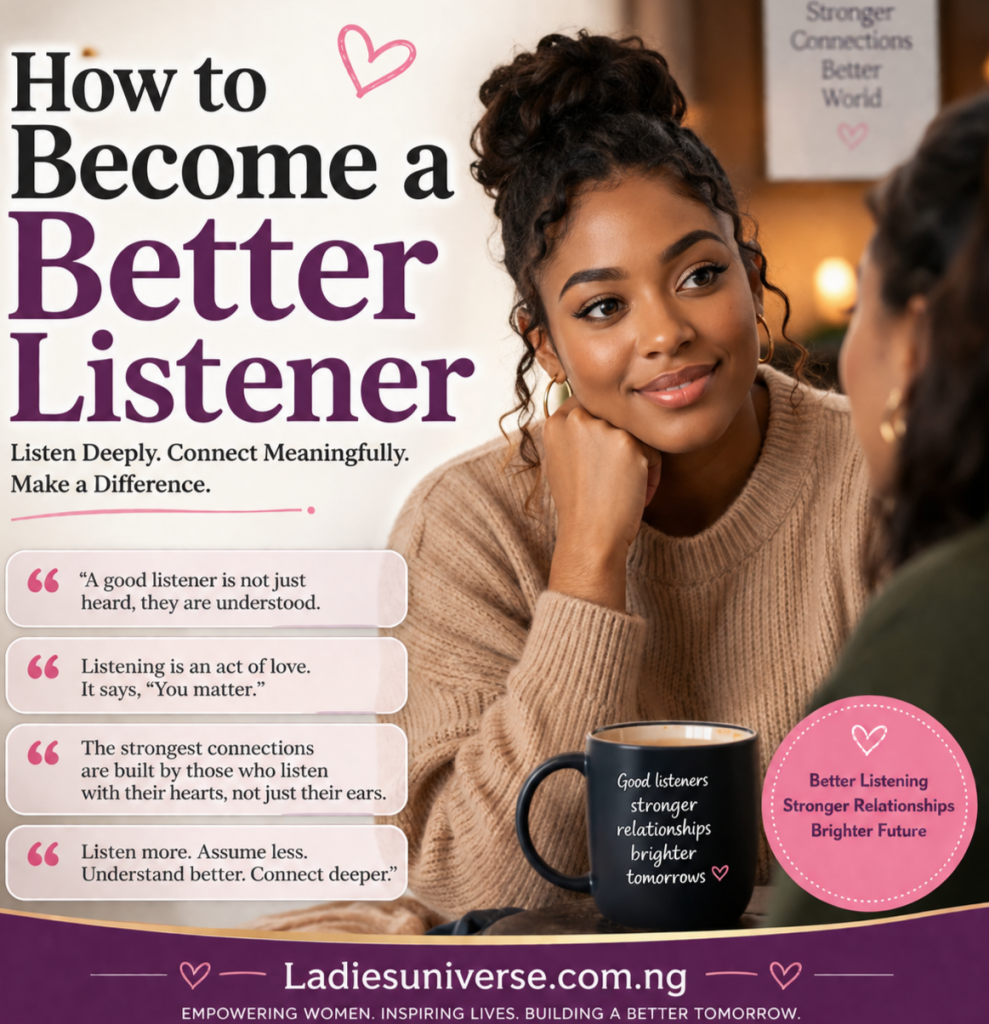
Listening Is a Skill That Improves with Practice
No one becomes an exceptional listener overnight. Like any valuable skill, listening improves through consistent practice. Start by focusing on one conversation each day where your only goal is to understand the other person completely. Over time, active listening will become a natural habit. People may not always remember everything you said, but they will often remember how you made them feel. Feeling heard is one of the greatest gifts you can offer another person.
Becoming a better listener is not about speaking less; it is about understanding more. When you give others your full attention, listen without judgement, ask thoughtful questions, and respond with empathy, you create stronger relationships and more meaningful conversations. In today’s fast-paced world, genuine listening has become increasingly rare. By developing this skill, you can become a better friend, partner, parent, colleague, and leader. More importantly, you help create a world where people feel respected, understood, and valued.Sometimes, the most powerful thing you can say is nothing at all; because your willingness to truly listen speaks louder than words.