

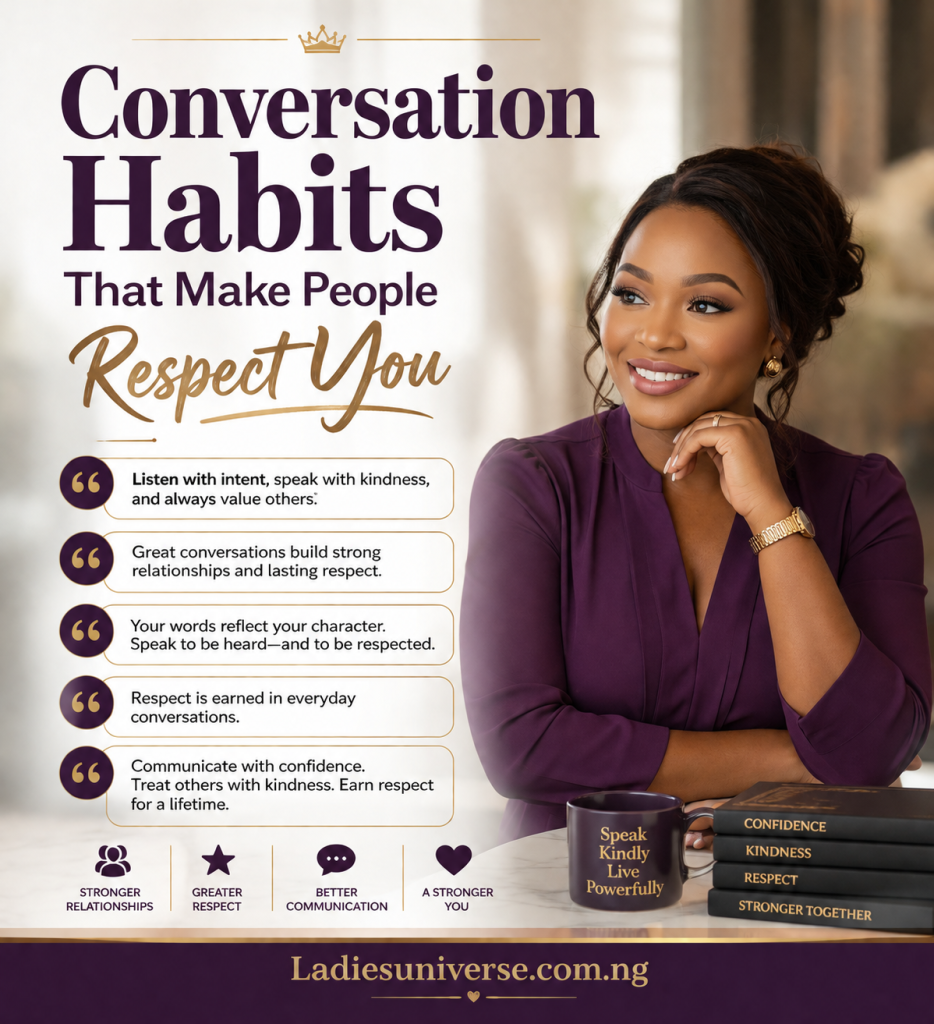
Respect is not something you can demand; it is something you earn through your words, actions, and the way you treat others. While appearance, achievements, and skills may create a good first impression, your everyday conversations often determine how people truly perceive you. Whether you are speaking with family, friends, colleagues, clients, or strangers, your communication style has the power to build trust, strengthen relationships, and increase your credibility. People naturally respect individuals who communicate clearly, listen attentively, remain emotionally balanced, and treat others with dignity.The good news is that respectful communication is a skill anyone can develop. By practising healthy conversation habits, you can become someone people enjoy talking to and genuinely admire.
In this guide, you’ll discover practical conversation habits that make people respect you, why they work, and how you can begin using them in your daily interactions.
Why Conversation Habits Matter
Every conversation leaves an impression. Your words reveal your character, emotional intelligence, confidence, and maturity more than you may realise.
Healthy communication helps you:
Build stronger relationships
Gain trust more quickly
Reduce misunderstandings
Handle disagreements respectfullyImprove your professional reputation
Become a better leader and friend
People may forget what you said, but they often remember how your words made them feel.
Listen More Than You Speak: One of the fastest ways to earn respect is becoming an excellent listener. Many people listen only to reply rather than to understand. Respectful communicators focus completely on the speaker before forming their own response. Good listening means:
Maintaining appropriate eye contact
Avoiding interruptions
Asking thoughtful follow-up questions
Paying attention to both words and emotions
When people feel heard, they naturally feel valued. Try this:
Instead of immediately offering advice, ask: “How did that make you feel?” This simple question shows genuine interest.
Speak Clearly and Confidently: Confidence is not about having the loudest voice. It is about expressing yourself calmly and clearly.
Avoid constantly using phrases like: “I don’t know but…” “This may sound stupid…” “I’m probably wrong… “While humility is important, repeatedly undermining yourself can reduce how confidently your message is received.
Instead, communicate with clarity while remaining open to learning. For example: Instead of: “I’m not sure if this makes sense. “Say: “Here’s what I think based on the information I have.”
Think Before You Speak: Not every thought needs to be spoken immediately. People who are respected often pause briefly before responding. This helps them choose words carefully rather than reacting emotionally. Before speaking, ask yourself:
Is it true?Is it helpful?
Is it necessary?
Is it kind?
A short pause can prevent unnecessary conflict.
Avoid Constant Complaining: Everyone experiences difficult moments, but constant negativity can push people away. Respect grows when you acknowledge problems while also focusing on solutions. Instead of saying: “Everything is terrible.” Try: “This situation is challenging, but here’s what I’m doing about it.” People admire individuals who remain hopeful during difficult times.
Respect Other People’s Opinions: You do not have to agree with everyone to show respect. Healthy conversations allow room for different perspectives. Rather than saying: “You’re completely wrong.” Try: “I understand your point. I see it differently because…” This approach encourages meaningful discussions instead of arguments.
Keep Your Promises: Your words should match your actions. If you tell someone you will call, reply, help, or complete a task, follow through whenever possible. Reliable communication builds trust, and trust creates lasting respect. If circumstances change, communicate honestly instead of disappearing.
Avoid Gossip: Speaking negatively about people behind their backs often damages your own reputation more than theirs. People wonder: “If they gossip about others with me, will they gossip about me too?” Respectful individuals avoid spreading rumours or discussing private matters unnecessarily. Choose conversations that encourage growth rather than criticism.
Use People’s Names Respectfully: A person’s name is deeply personal.Using someone’s name naturally during conversation can help create warmth and connection without overdoing it. Simple examples include: “Thank you, Sarah.” “That’s a great point, David.” This small habit shows attentiveness and respect.
Admit When You’re Wrong: Nobody respects someone who refuses to accept responsibility. Acknowledging mistakes demonstrates maturity, honesty, and emotional strength. Instead of making excuses, say: “You’re right. I made a mistake, and I’ll fix it. “People usually respect accountability more than perfection.
Don’t Interrupt Others: Interrupting often communicates:
Impatience
Disrespect
Self-centredness
Allow people to finish their thoughts before responding. If you accidentally interrupt, apologise politely. For example: “Sorry, please continue.” This simple correction reflects good manners.
Control Your Tone: People respond not only to your words but also to how you say them. A calm, respectful tone is more persuasive than shouting or speaking aggressively. Even during disagreements:
Lower your voice.
Stay calm.
Focus on facts.
Avoid insults.
Emotional control is a sign of confidence, not weakness.
Ask Meaningful Questions: Interesting conversations are built on curiosity. Instead of asking questions that end with “yes” or “no,” encourage deeper discussions. Examples include:
“What inspired you to do that?”
“What did you learn from the experience?”
“How would you approach it differently now?”
People appreciate those who show genuine interest in their lives.
Avoid Dominating Every Conversation: Healthy conversations involve balance. If you spend the entire conversation talking about yourself, others may feel ignored. Pay attention to whether both people are contributing. Aim for conversations where listening and speaking are equally valued.
Speak Kindly About Absent People: One powerful habit of respected individuals is speaking well of others even when they are not present. Offering sincere praise instead of criticism demonstrates integrity. Celebrate other people’s successes without jealousy. Kindness often returns to you through stronger relationships.
Stay Calm During Disagreements: Disagreements are normal. Disrespectful behaviour is optional. When conversations become emotional:
Pause before responding.
Avoid personal attacks.
Focus on solving the issue rather than winning the argument.
Respect grows when people know they can disagree with you without being insulted.
Avoid Constantly Seeking Validation: Confident people do not need everyone to approve of every decision. Repeatedly asking: “Do you think I’m good enough?” “Am I doing okay?” “Do you like this?” can unintentionally communicate insecurity. Instead, trust your judgement while remaining open to constructive feedback. Healthy confidence attracts respect.
Be Honest Without Being Harsh: Honesty and kindness should work together. You can tell the truth without humiliating someone. Instead of saying:
“That idea is terrible.” Try:
“I think there may be another approach that could work even better.”
Respectful honesty preserves relationships.
Know When to Stay Silent: Sometimes silence communicates wisdom better than unnecessary words.
Not every criticism deserves a response.
Not every argument requires your participation.
Learning when to speak and when to remain silent reflects emotional intelligence and self-control.
Express Gratitude Frequently: People appreciate being appreciated. Simple phrases like: “Thank you.” “I appreciate your help.” “That means a lot.” strengthen relationships and create positive conversations. Gratitude makes others feel valued and respected.
Encourage Rather Than Discourage: People remember those who inspire them. Offer encouragement through sincere compliments and supportive words. For example: “You handled that really well.” “I’m proud of your progress.” “Keep going; you’ve come a long way. “Encouraging conversations build trust and lasting respect.
Common Conversation Habits That Reduce Respect
Avoid these behaviours if you want healthier relationships:
Interrupting people constantly
Speaking negatively about others
Always trying to prove you’re right
Ignoring other people’s opinions
Constantly complaining
Using insulting or sarcastic language
Talking only about yourself
Breaking promises
Reacting impulsively
Refusing to apologise
Replacing these habits with respectful communication can transform your personal and professional relationships.
Respect is built one conversation at a time. Every interaction is an opportunity to demonstrate kindness, confidence, honesty, and emotional intelligence. You do not need to be the loudest person in the room to earn admiration. Often, the people who are most respected are those who listen carefully, speak thoughtfully, remain calm under pressure, and treat everyone with dignity. Start by practising one or two of these habits each day. Over time, these small improvements will strengthen your relationships, boost your confidence, and help you become someone others naturally trust and respect.
Remember, the way you speak reflects who you are. Make every conversation an opportunity to leave people feeling heard, valued, and respected.