
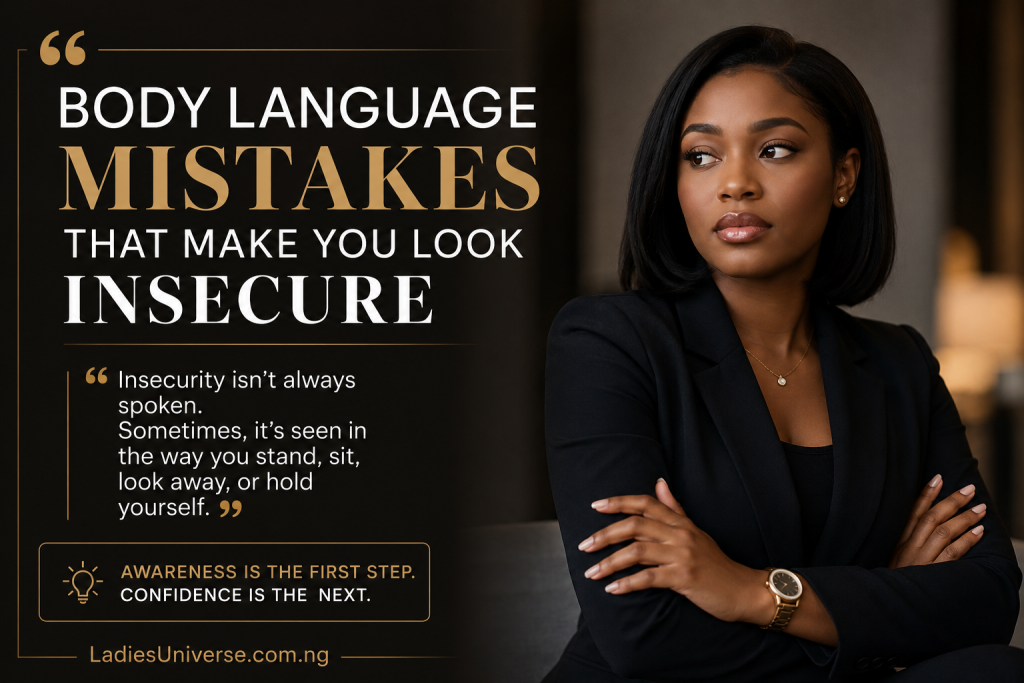
Confidence isn’t just about what you say; it is also about how you carry yourself. Long before you introduce yourself, people often form first impressions based on your posture, facial expressions, eye contact, and overall body language. Research in psychology and communication suggests that nonverbal cues play a significant role in how others perceive confidence, trustworthiness, and competence. While body language should never be used to judge someone’s character completely, certain habits can unintentionally make you appear nervous, uncertain, or less self-assured than you truly are. The good news? Body language is a skill that can be improved with awareness and consistent practice.
In this article, we’ll explore the most common body language mistakes that make you look insecure and practical ways to replace them with more confident, approachable behaviors.
Why Body Language Matters
Body language includes facial expressions, posture, gestures, eye contact, and movement. According to communication research, people rely heavily on these nonverbal signals when interpreting messages, especially during first impressions, interviews, presentations, networking events, and social interactions. Confident body language can:
Improve first impressions.
Increase trust and credibility.
Enhance communication.
Help you feel more confident internally.
Strengthen professional and personal relationships.
On the other hand, insecure body language may unintentionally communicate fear, uncertainty, or discomfort.
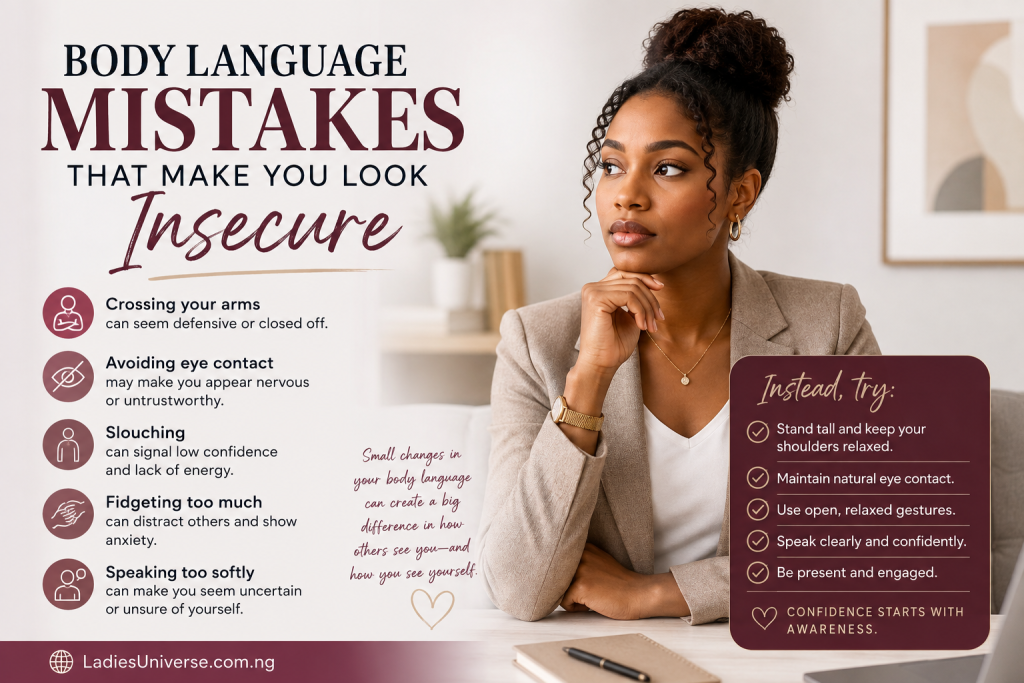
Avoiding Eye Contact: One of the most common signs of insecurity is consistently avoiding eye contact. Looking away every few seconds, staring at the floor, or focusing on your phone while someone is speaking can make you appear nervous, uninterested, or lacking confidence; even if you’re simply shy.How to fix it:
Maintain comfortable eye contact during conversations. You don’t need to stare continuously. Looking at someone’s eyes for a few seconds before naturally looking away creates a balanced, confident interaction.
Slouching Your Shoulders: Poor posture can instantly affect how people perceive you. Slouching often makes you appear tired, uncertain, or disengaged. It may also influence how you feel emotionally, as posture has been linked to mood and self-perception. How to fix it:
Stand tall with your shoulders relaxed and slightly back. Keep your head level and your spine straight without becoming stiff. Good posture projects confidence while reducing physical strain.
Crossing Your Arms Constantly: Although crossing your arms isn’t always negative; it may simply mean you’re cold or comfortable; it can sometimes signal defensiveness or anxiety during conversations.If done repeatedly, it may create an emotional barrier between you and others. How to fix it:
Allow your arms to rest naturally by your sides or use relaxed hand gestures while speaking.
Fidgeting Excessively: Playing with your hair, tapping your fingers, clicking a pen, shaking your legs, or constantly adjusting your clothes can distract others and suggest nervousness. Many people fidget without realizing it. How to fix it:
Become aware of your habits. If you tend to fidget, keep your hands gently clasped or rest them comfortably on your lap or table when appropriate.
Speaking With Minimal Facial Expression: A blank facial expression can make you appear uncomfortable, disconnected, or difficult to approach. Similarly, forcing a smile throughout an interaction can appear unnatural. How to fix it: Allow your facial expressions to match the conversation naturally. A genuine smile, raised eyebrows when interested, and relaxed facial muscles help communicate warmth and confidence.
Making Yourself Physically Smaller: Some people unconsciously shrink themselves by hunching over, folding inward, or keeping their elbows tightly against their body. This often happens during meetings, interviews, or unfamiliar social situations. How to fix it:
Take up a natural amount of space. Sit upright, keep your shoulders open, and avoid curling inward. The goal isn’t to dominate a room but to appear comfortable in your own presence.
Weak or Hesitant Handshakes: Where handshakes are culturally appropriate, an extremely limp or hesitant handshake may leave an impression of uncertainty. However, cultural norms vary, and many people now prefer verbal greetings, waves, or other forms of respectful acknowledgment. How to fix it: If offering a handshake, keep it firm but gentle, make eye contact, and smile naturally.
Constantly Looking at Your Phone: Frequently checking notifications during conversations sends a message that your attention is elsewhere. Even brief glances can reduce connection and engagement. How to fix it: Keep your phone away during important conversations, meetings, meals, or networking events unless you are expecting an urgent call.
Speaking Too Quietly: Body language and vocal delivery work together. A voice that is consistently too soft may make you appear uncertain, even when your ideas are valuable. How to fix it: Speak clearly at a comfortable volume. Slow down slightly instead of rushing through your words, and breathe between sentences.
Nodding Excessively: Nodding occasionally shows active listening, but doing it constantly may suggest you’re seeking approval rather than engaging confidently. How to fix it: Use natural nods while maintaining eye contact. Feel comfortable expressing your own opinions respectfully instead of agreeing with everything.
Apologizing Through Your Body Language: Sometimes your body communicates apology even when you haven’t said “sorry.” Examples include:
Shrugging repeatedly.
Looking down after every sentence.
Pulling your shoulders inward.
Speaking while covering your mouth.
These habits may unintentionally reduce your presence. How to fix it: Keep your head up, relax your shoulders, and allow your gestures to remain open and calm.
Rushing Your Movements: People who feel anxious often walk quickly, make hurried gestures, or constantly shift their weight. Fast, restless movements may signal nervousness. How to fix it: Slow your movements slightly. Walk with purpose, pause before responding to questions, and avoid unnecessary rushing.
Can Confident Body Language Increase Confidence?
Interestingly, body language doesn’t just influence how others see you; it can also affect how you feel. While adopting confident postures is not a cure for anxiety or low self-esteem, maintaining good posture, making appropriate eye contact, and practicing calm movements may help you feel more composed during social interactions. Building genuine confidence also comes from developing skills, gaining experience, practicing self-compassion, and preparing well for important situations.
Everyone displays insecure body language occasionally. Stress, fatigue, unfamiliar environments, and major life events can affect how we carry ourselves. Rather than trying to appear perfect, focus on becoming more aware of your habits. Small adjustments; standing taller, maintaining comfortable eye contact, relaxing your shoulders, and reducing unnecessary fidgeting; can make a remarkable difference in how others perceive you and how you perceive yourself. True confidence isn’t about pretending to be fearless. It’s about communicating authenticity, self-respect, and openness through both your words and your actions.