

Have you ever looked around and felt like everything in your life was falling apart at once? Your room is untidy, your to-do list keeps growing, your mind feels overwhelmed, and even the smallest tasks seem impossible to complete. If that sounds familiar, you’re not alone. Life can become messy for many reasons. Work responsibilities, family obligations, financial pressure, health concerns, emotional stress, or unexpected changes can leave anyone feeling disorganized.
The good news is that you don’t have to fix everything overnight. Organizing your life is not about becoming perfect; it’s about creating simple systems that help you feel calmer, more focused, and in control.In this guide, you’ll learn practical, research-backed strategies to organize your life when everything feels messy and regain a sense of balance one step at a time.
Why Life Feels So Overwhelming
Before trying to organize your life, it’s important to understand why things feel chaotic. Mental overload happens when your brain is trying to manage too many responsibilities at once. According to research from the American Psychological Association (APA), chronic stress affects concentration, decision-making, and productivity. When your brain is overwhelmed, even simple tasks can feel exhausting. Instead of blaming yourself, recognize that feeling overwhelmed is often a sign that your current systems need adjusting; not that you’ve failed.
Start With Your Mind Before Your Space: Many people rush to clean their homes while ignoring the mental clutter causing the stress. Take five to ten minutes to write down everything that’s on your mind. Don’t organize it yet. Simply transfer your thoughts onto paper or into a notes app. This simple “brain dump” helps reduce mental overload by freeing your mind from trying to remember every responsibility. You may include:
Bills to pay
Appointments
Work deadlines
Personal goals
Household chores
Worries or concerns
Once everything is written down, you’ll often realize the situation isn’t as impossible as it felt.
Stop Trying to Fix Everything Today: One of the biggest mistakes people make is trying to completely reorganize their lives in one day. Real organization happens through consistent small actions. Instead of saying:
“Today I’ll organize my entire life.”
Say:
Today I’ll organize my desk.
Today I’ll answer three emails.
Today I’ll wash the dishes.
Today I’ll plan tomorrow.
Small wins build momentum and reduce anxiety.
Prioritize What Actually Matters: Not every task deserves equal attention. Ask yourself:
What must be done today?
What can wait?
What can someone else help with?
What no longer needs my attention?
A simple priority system works well:
High Priority: Urgent and important.
Medium Priority: Important but not urgent.
Low Priority: Can wait or be delegated.
Focusing on priorities prevents you from wasting energy on less important tasks while ignoring what truly matters.
Declutter One Small Area: A cluttered environment often increases stress. Research suggests that excessive clutter can negatively affect mood and concentration because your brain constantly processes visual distractions. Don’t attempt to clean your whole house. Choose one area:
Your bedside table
Your handbag
One kitchen drawer
Your wardrobe
Your work desk
Finishing one space gives you a sense of accomplishment that motivates you to continue.
Create a Simple Daily Routine: Routines reduce decision fatigue.When you already know what comes next, your brain uses less energy deciding what to do. A simple routine might look like:
Morning:
Make your bed
Drink water
Eat breakfast
Review today’s priorities
Afternoon:
Complete your most important task
Take short breaks
Respond to messages
Evening:
Tidy your space
Prepare clothes for tomorrow
Write tomorrow’s to-do list
Sleep at a consistent time
Your routine doesn’t need to be perfect; it only needs to work for you.
Learn to Say No: Sometimes our lives become messy because we’ve said “yes” to too many commitments. Protect your time by politely declining tasks that don’t align with your priorities. Remember:
Every unnecessary “yes” often becomes another source of stress. Healthy boundaries create room for what truly matters.
Organize Your Digital Life Too: Digital clutter is just as overwhelming as physical clutter. Take time to:
Delete unnecessary files.
Unsubscribe from unwanted emails.
Organize important documents into folders.
Remove apps you no longer use.
Back up important photos and files.
A cleaner digital space makes daily tasks easier and less stressful.
Focus on One Task at a Time: Multitasking often reduces efficiency. Instead of switching constantly between different activities, complete one task before moving to the next whenever possible. Whether you’re studying, working, or cleaning, giving your full attention to one activity usually produces better results while reducing mental fatigue.
Take Care of Your Physical Health: It’s difficult to organize your life when your body is exhausted. Support your productivity by:
Getting enough sleep.
Drinking plenty of water.
Eating balanced meals.
Exercising regularly, even if it’s just a short walk.
Taking breaks during long work sessions.
Good physical health supports clearer thinking and better decision-making.
Accept That Progress Is Better Than Perfection: Many people stay stuck because they’re waiting for the “perfect” time to start.
Perfection is unrealistic.
Progress is sustainable.
Your house doesn’t have to look like a magazine.
Your planner doesn’t have to be colour-coded.
Your schedule doesn’t have to be flawless.
Small improvements every day lead to lasting change.
Helpful Tools That Can Keep You Organized
You don’t need expensive planners or complicated systems.Simple tools include:
A notebook
Google Calendar
Phone reminders
Sticky notes
A weekly planner
A habit tracker
Choose tools you’ll actually use consistently.
Common Mistakes to Avoid
While organizing your life, avoid these common habits:
Trying to change everything overnight.
Comparing yourself to others.
Ignoring rest.
Keeping unnecessary clutter.
Setting unrealistic goals.
Giving up after one difficult day.
Remember that everyone experiences messy seasons. Organization is a skill that develops with practice.
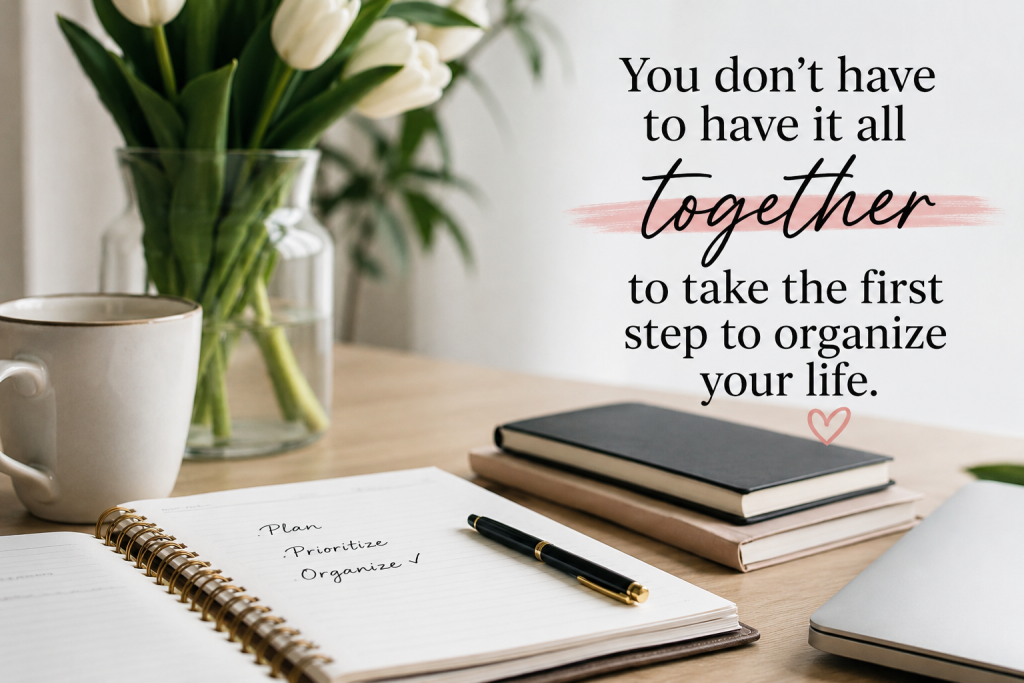
Feeling like your life is messy doesn’t mean you’re failing; it means you’re human. Every person goes through seasons of overwhelm, uncertainty, and disorder. What matters most is taking one small step forward instead of waiting until you feel completely motivated.
Begin with your thoughts, organize your priorities, simplify your surroundings, and build routines that support your goals rather than exhaust you. Over time, those small, consistent actions will create a life that feels calmer, more manageable, and more fulfilling. You don’t have to organize everything today. Start with one task, one decision, or one corner of your space. Tomorrow, take another step. Before long, you’ll realize that the life that once felt chaotic has gradually become one you can navigate with confidence.