
Have you ever walked away from a conversation feeling drained, used or taken for granted? Perhaps you always say “yes” even when you want to say “no,” lend money that never gets repaid, or constantly put other people’s needs ahead of your own. If this sounds familiar, you are not alone. Many women struggle with being taken advantage of because they naturally want to help others, avoid conflict or maintain healthy relationships.
While kindness is a beautiful quality, it should never come at the expense of your happiness, mental health or self-respect. Learning how to protect yourself without becoming cold or selfish is one of the most empowering life skills you can develop.
In this guide, you’ll discover practical, research-backed strategies to stop people from taking advantage of you while maintaining healthy and meaningful relationships.
Why Do People Take Advantage of Others?
People may take advantage of others for different reasons. Some do it intentionally because they recognise someone who rarely says no. Others may not even realise they are crossing boundaries because those boundaries have never been clearly communicated. According to the American Psychological Association (APA), healthy personal boundaries are essential for emotional well-being and maintaining respectful relationships. When boundaries are weak or unclear, people are more likely to expect unlimited access to your time, energy and resources. Being kind does not make you weak. However, constantly sacrificing yourself without limits can unintentionally encourage unhealthy behaviour from others.
Signs That People Are Taking Advantage of You
Recognising the problem is the first step towards solving it. You may be experiencing this if:
People only contact you when they need something.
You feel guilty whenever you say no.
You constantly solve other people’s problems while neglecting your own.
Your generosity is rarely appreciated.
Others expect your help instead of asking politely.
You feel emotionally exhausted after spending time with certain people.
Your opinions and feelings are often ignored.
If several of these signs sound familiar, it may be time to establish healthier boundaries.
Learn to Say No Without Feeling Guilty: One of the biggest reasons people are taken advantage of is the inability to say no. Remember this simple truth:
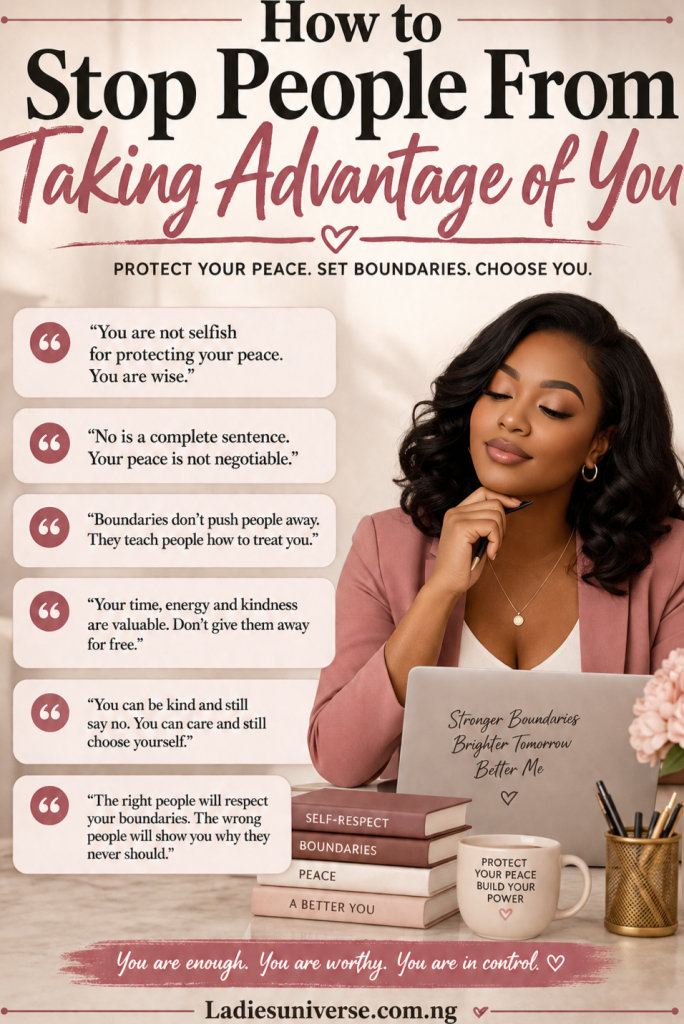
No is a complete sentence.
You do not need a lengthy explanation or excuse every time you decline a request. Instead of saying: “I’m so sorry, maybe I can try…” Say: “I’m unable to help this time.”The more confidently you say no, the easier it becomes.
Set Healthy Boundaries: Boundaries tell people how you expect to be treated. Healthy boundaries may include:
Protecting your personal time.
Limiting financial assistance.
Refusing emotional manipulation.
Speaking up when someone crosses a line.
Respecting your own needs as much as you respect others’.
Healthy boundaries strengthen relationships because they encourage mutual respect instead of resentment.
Stop Trying to Please Everyone: People-pleasing often comes from a fear of rejection or disappointing others. The reality is simple: You cannot make everyone happy. Trying to satisfy everyone usually leads to burnout while teaching others that your needs come last. Instead of asking: “Will they be upset?” Ask yourself: “Is this healthy for me?” Your well-being matters too.
Trust Your Instincts: Your intuition often notices warning signs before your mind does. If someone consistently makes you feel uncomfortable, pressured or manipulated, do not ignore those feelings. Research on emotional intelligence suggests that recognising and responding to your emotions helps you make healthier interpersonal decisions. Trusting yourself is an important form of self-protection.
Stop Over-Explaining Yourself: Many people who struggle with boundaries feel they must justify every decision. You don’t. For instance:
Instead of saying: “I can’t because I’m tired, my schedule is busy, I have so many things…” Simply say: “That doesn’t work for me.” Short, respectful responses reduce opportunities for manipulation.
Recognise Emotional Manipulation: Manipulative people often use tactics such as:
Guilt-tripping.
Playing the victim.
Silent treatment.
Excessive flattery.
Making you feel responsible for their happiness.
Once you recognise these behaviours, they lose much of their power. Healthy relationships are built on honesty, not emotional pressure.
Value Your Time: Your time is one of your most valuable resources. If you constantly cancel your plans to accommodate everyone else, people may begin to expect unlimited access to your schedule. Protect your calendar. It’s perfectly acceptable to say: “I’m already committed.” You do not need to explain further.
Build Self-Confidence: Confident people are less likely to be exploited because they communicate their worth clearly. Ways to build confidence include:
Celebrating small achievements.
Practising positive self-talk.
Learning new skills.
Surrounding yourself with encouraging people.
Keeping promises you make to yourself.
Confidence isn’t arrogance; it is knowing your value.
Choose Relationships That Respect You: Healthy relationships are balanced. Both people give. Both people receive. If you constantly invest while someone only takes, the relationship becomes unhealthy. Ask yourself:
Do they respect my opinions?
Do they appreciate my kindness?
Do they support me when I need help?
Do I feel safe expressing my needs?
If the answer is consistently no, it may be time to create some distance.
Stop Feeling Responsible for Everyone: Compassion is wonderful. Carrying everyone else’s problems is not. You are responsible for your own choices; not for fixing every adult around you. Sometimes the most loving thing you can do is allow others to solve their own problems.
Speak Up Early: Small problems often become bigger when ignored. If someone repeatedly interrupts your boundaries, address it respectfully but firmly. For example: “I’m happy to help occasionally, but I can’t continue doing this every week.” Clear communication prevents misunderstandings and reduces resentment.
Remember That Respect Starts With You: People usually treat us according to the standards we consistently accept. When you respect your own time, energy and emotional well-being, others are more likely to do the same. This doesn’t mean everyone will like your boundaries. It means the right people will respect them.
How to stop people from taking advantage of you isn’t about becoming rude, selfish or unkind. It’s about valuing yourself enough to protect your peace, time and emotional health.
Kindness should never require self-sacrifice.
You deserve relationships where your generosity is appreciated, your voice is heard and your boundaries are respected.
Start with one small change today.
Say no when necessary.
Trust your instincts.
Communicate clearly.
The more you practise healthy boundaries, the more confident and empowered you will become. Remember: people who truly care about you will respect your limits; not punish you for having them.