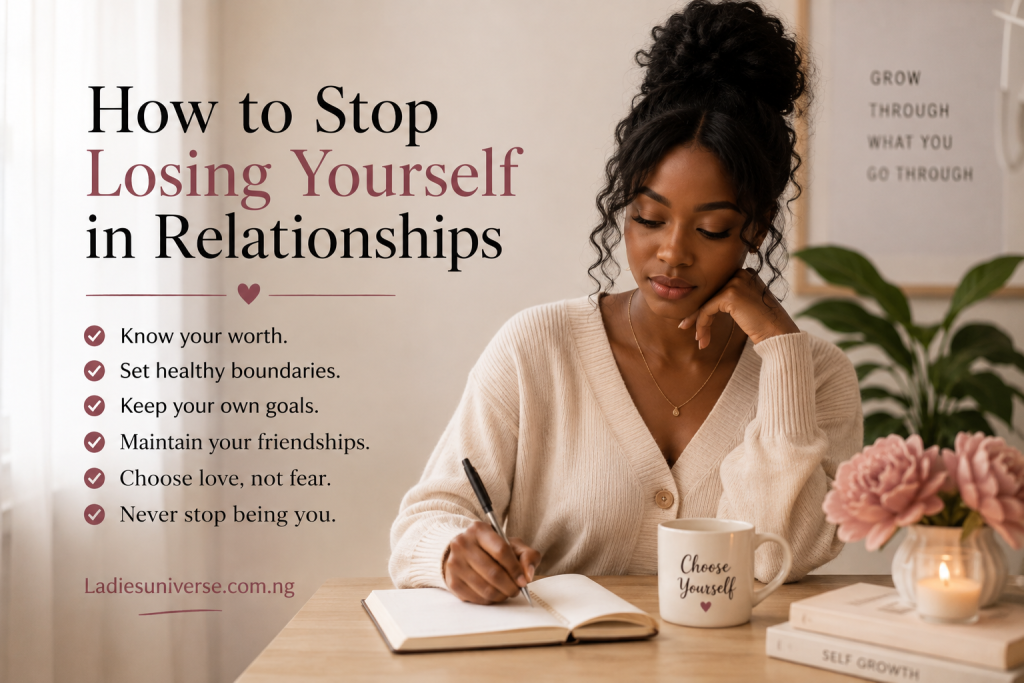
Love can be one of the most beautiful parts of life, but loving someone should never require you to abandon yourself. When you genuinely care about a person, it is natural to want to make them happy, spend time with them, support their dreams, and make compromises. The problem begins when compromise slowly turns into self-abandonment. You stop doing the things you enjoy, distance yourself from people you love, silence your opinions, ignore your boundaries, or make every decision based on what your partner wants. Eventually, you may look at yourself and wonder, “When did I become so different from the person I used to be?” A healthy relationship should create room for both love and individuality.
Psychological research on romantic relationships has consistently highlighted the importance of autonomy; the ability to experience yourself as a person who can make meaningful choices and remain authentic within a relationship. Research has also linked relationship autonomy with healthier responses to conflict and greater relationship satisfaction.
So, how do you love deeply without losing yourself?
1. Remember Who You Were Before the Relationship: One of the simplest ways to protect your identity is to remember that you existed before your relationship did. You had interests, friendships, ambitions, routines, opinions, values, and dreams before you met your partner. Those things should not automatically disappear because you are now in love. Ask yourself:
What did I enjoy doing before this relationship?
What goals did I have for myself?
Who were the people I regularly connected with?
What values are important to me?
What parts of myself have I neglected?
You do not need to become exactly who you were before. Relationships naturally change us. The goal is to make sure the changes are healthy and intentional rather than the result of constantly trying to become someone your partner will approve of.
2. Keep Your Own Goals: A relationship should be part of your life, not your entire life. Continue working toward your education, career, financial goals, creative interests, fitness goals, personal development, or other ambitions that matter to you. It is easy to postpone personal goals when you are deeply invested in someone. You may tell yourself, “I will focus on myself later.” But months or years of putting yourself second can eventually create resentment. Your partner can be part of your future without becoming the only thing you are building. Research on autonomy in romantic relationships suggests that people who experience greater autonomy can also experience better relationship functioning and satisfaction.
3. Maintain Meaningful Friendships: Being in love does not mean you have to disappear from your friends’ lives. Healthy friendships can provide emotional support, perspective, companionship, and a sense of identity outside your romantic relationship. When one person becomes your only source of emotional connection, the relationship can begin carrying pressure that it was never designed to carry. Make time for people who genuinely care about you. You do not have to choose between your partner and your friends. A healthy relationship allows space for both.
4. Learn to Say “No” Without Feeling Guilty: One of the clearest signs that you are losing yourself is becoming afraid to say no. Perhaps you agree to things you dislike because you are scared of disappointing your partner. Maybe you constantly change your plans, suppress your feelings, or accept behavior that violates your values simply to avoid conflict. But love does not make your boundaries unnecessary. A boundary is not a punishment. It is a way of communicating what you are comfortable with, what you are not comfortable with, and what you need to remain emotionally healthy. Healthy interpersonal boundaries help preserve individuality and a sense of separateness between people. You can love someone and still say, “I am not comfortable with that.”
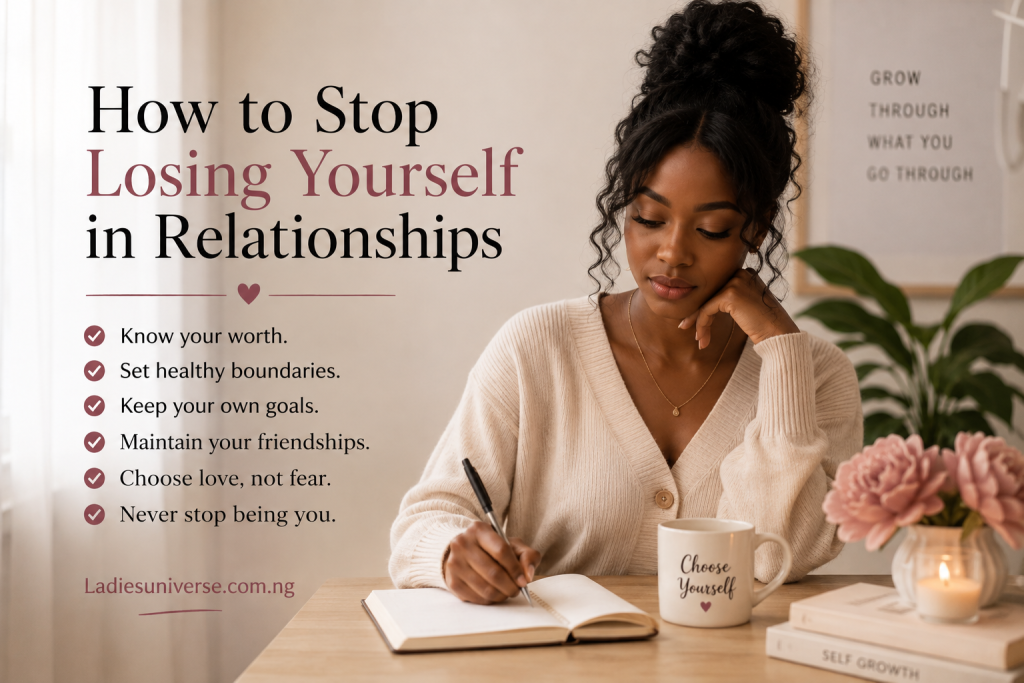
5. Don’t Make Every Decision Around Your Partner: Before making a major decision, ask yourself what you actually want. This does not mean ignoring your partner’s feelings. Relationships involve consideration and compromise. However, there is a difference between considering someone’s perspective and allowing their preferences to completely determine your life. Ask yourself:
“If I were single, what would I choose?”
You may be surprised by how often you have been making decisions based primarily on keeping your relationship comfortable. Your partner’s opinion matters, but so does yours.
6. Stop Changing Your Personality to Be Loved: There is a difference between personal growth and personality suppression. If your partner encourages you to communicate better, become more responsible, or develop healthier habits, that can be positive. But constantly changing your personality, appearance, opinions, interests, or values because you fear rejection is another matter. You should not have to perform a version of yourself just to keep someone’s affection. Research on individuality in couples has found that feeling respected for one’s individuality and experiencing personal autonomy are meaningful dimensions of healthy couple relationships and are associated with relationship satisfaction and partner well-being. The right relationship should give you room to be genuinely yourself.
7. Keep Your Financial Independence Where Possible: Money can become an overlooked part of losing yourself in a relationship.When possible and appropriate for your circumstances, maintain some financial independence. Continue developing your skills, understanding your finances, contributing toward your goals, and knowing what you own and what you are responsible for. Financial independence is not about expecting a relationship to fail. It is about maintaining a sense of personal capability. Being loved should never mean becoming completely helpless without your partner.
8. Pay Attention to How Often You Suppress Yourself: Sometimes losing yourself happens so gradually that you do not notice it.
You stop correcting misunderstandings because you do not want an argument.
You stop expressing your preferences because “anything is fine.”
You stop mentioning things that hurt you because you assume your partner will become angry.
Eventually, silence becomes your normal way of maintaining peace. But peace that requires you to constantly silence yourself is not necessarily healthy peace. Pay attention to patterns. If you regularly feel that you cannot express an opinion, make choices, maintain friendships, or pursue your goals without fear of punishment, manipulation, or intimidation, that deserves serious attention.
9. Make Time to Be Alone: Being comfortable alone is an important part of maintaining your identity.
You do not need to spend every free moment with your partner.
Take yourself out.
Read.
Exercise.
Pray or reflect.
Work on your hobbies.
Learn something new.
Enjoy quiet time.
Time apart does not automatically weaken love. In fact, research on close relationships suggests that supportive relationships can coexist with independent functioning and personal goal pursuit. You can miss someone and still enjoy your own company.
10. Check Whether You Are Choosing Love or Fear: Perhaps the most important question is this:
“Am I doing this because I genuinely want to, or because I am afraid of losing my partner?”
There is a significant difference.
Healthy compromise comes from choice. Self-abandonment often comes from fear. If you constantly think, “If I don’t do this, they will leave me,” you may need to examine whether fear has become the foundation of your relationship. A healthy relationship should not require you to continually prove that you deserve to be loved.
You Can Love Someone Without Losing Yourself
Losing yourself in a relationship does not always happen because you love too much. Sometimes it happens because you forget that you are also someone worth loving, protecting, listening to, and prioritizing.Your relationship matters. But your identity matters too. You can be deeply committed and still have your own dreams. You can be emotionally close and still need personal space. You can compromise without abandoning your values. You can consider your partner’s feelings without ignoring your own. The healthiest relationships are not necessarily those where two people become indistinguishable. They are relationships where two individuals can remain themselves while building something meaningful together. If you have already lost parts of yourself in a relationship, do not assume they are gone forever.
Start small.
Reconnect with an old friend.
Return to a forgotten hobby.
Set one honest boundary.
Work toward one personal goal.
Make one decision based on what you genuinely want.
Little by little, you can find your way back to yourself.Love should add to your life; not erase the person you are.